


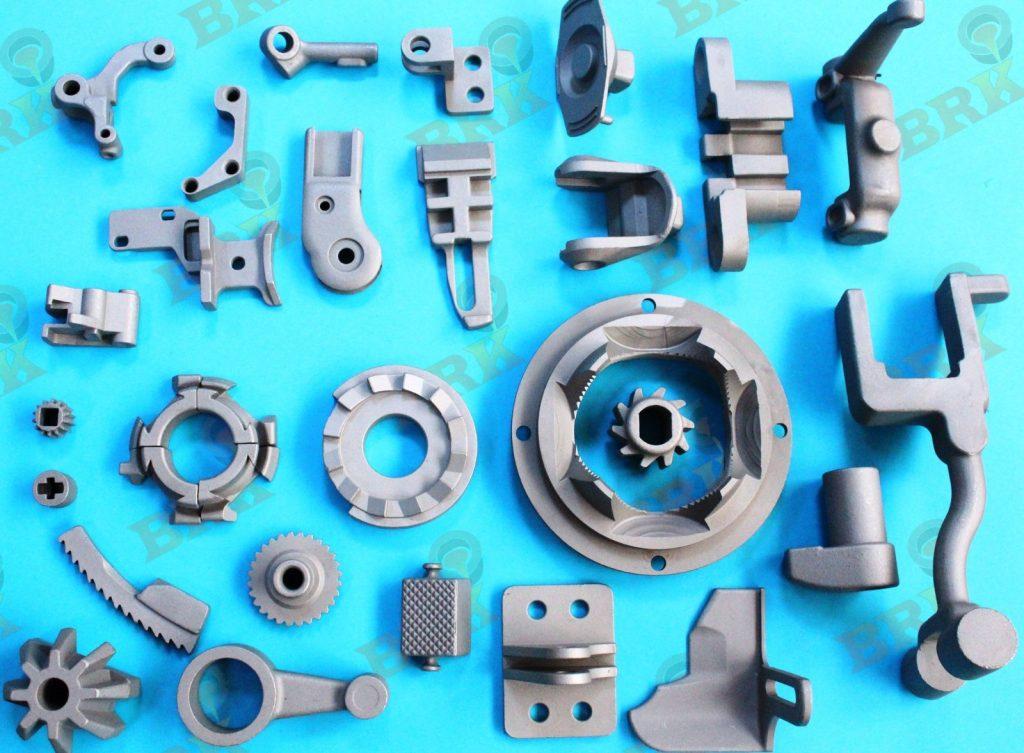
304 and 316 are the most common stainless steels in investment casting. Both are austenitic and look identical, and the key difference between them is molybdenum. The wrong choice can mean unnecessary cost or corrosion in service.
Cast Equivalents
304 and 316 are wrought grade names. Casting drawings usually use the equivalents below.
| Wrought | ASTM A351 cast grade | EN cast equivalent |
|---|---|---|
| 304 | CF8 | 1.4308 (GX5CrNi19-10) |
| 316 | CF8M | 1.4408 (GX5CrNiMo19-11-2) |
| 304L | CF3 | 1.4309 (GX2CrNi19-11) |
| 316L | CF3M | 1.4409 (GX2CrNiMo19-11-2) |
Chemical Difference
| Element | CF8 (304) | CF8M (316) |
|---|---|---|
| Carbon | 0.08% max | 0.08% max |
| Chromium | 18–21% | 18–21% |
| Nickel | 8–11% | 9–12% |
| Molybdenum | not specified | 2–3% |
These are ranges under ASTM A351. The standard and grade on your drawing always govern the order.
Corrosion Resistance
Molybdenum raises resistance to pitting and crevice corrosion, especially in chloride environments. That is why 316 is chosen for parts in contact with seawater, brine and chloride-bearing chemicals. In milder, chloride-free service, 304 is often enough. 316 is not immune either: at elevated temperatures, it can still suffer chloride stress corrosion cracking.
Cost
316 usually costs more than 304 because it contains molybdenum and more nickel. If a part will not see chlorides, 304 can lower the cost. Where corrosion is a real risk, the price difference is small compared with a failure in the field.
Which One Should You Choose?
- 304 (CF8): Food equipment, general machinery and chloride-free environments.
- 316 (CF8M): Marine service, chemical processing, pumps and valves, and chloride environments.
- L grades: Consider low-carbon CF3 and CF3M for parts that will be welded after casting.
BRK Metal produces 304 and 316 stainless steel investment castings from 1 g to 25 kg to customer drawings. To agree on the right grade for your part, send us your drawing.